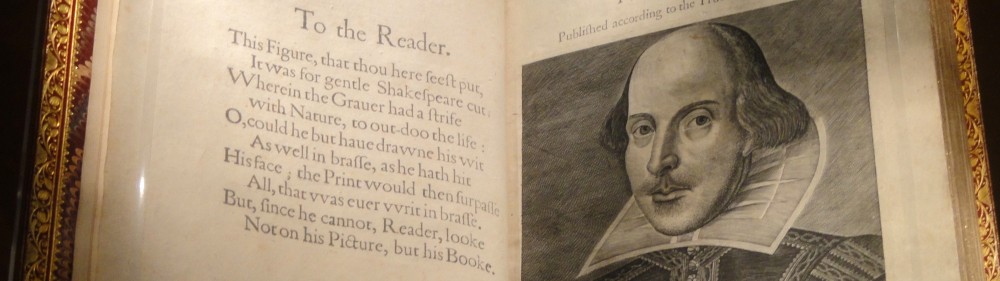
 I was caught off guard by Henry VI, Part I. I wasn’t prepared, I now realize, for a history play about a history of which I knew little. The Henry VI plays (three in the cycle) are rich and complex with massive cast lists. They presuppose a subtle knowledge of the unsteady relationships among the characters — their long-standing grudges and hatreds. The plays expect the audience to gasp when the youthful versions of later heroes and villains take the stage.
Though my education steeped me in Elizabethan literature and history, the War of the Roses was always just glimpsed. The three plays in the Henry VI cycles are Shakespeare’s rendering of that War, a rendering that is not an accurate history (of course), but a literary history filtered through his present that conjoins key moments spread across several decades. Part I, which is believed to have been written after Parts II and III, feels like a proper prequel. Marjorie Garber even calls it one. The Tudor audiences must have smiled to each other knowingly when the houses of York and Lancaster begin bickering and calling out “teams” by passing out white and red roses. With events occurring 150 years before Shakespeare’s time, the War of the Roses was about as distant from Shakespeare as the Civil War is from us, but the resolution was only one king away (it was Henry VII who unified York and Lancaster in the Tudor dynasty).
Harold Bloom has referred to literature as a “difficult pleasure.” The Henry IV cycle is just such a rewarding, difficult set of plays. If you haven’t read them, I encourage you to devote the time after first reading a bit (not too much is required) about Britain in the 1400s.
Somehow, I didn’t have the same trouble wrapping my brain around Henry V. Of course, my first experience of that play was a film — Kenneth Branagh’s adaptation. It also has an arc — culminating in the Battle of Agincourt — that fits filmic models for storytelling: a young king proves himself in a series of conflicts. He gives a rousing speech to his troops. He wins. He gets the girl.
The Henry VI plays offer no such simple summary. They are truly of the form of history — chaotic, emotionally shifting without a strong beginning, middle, and end. But the lack of a traditional arc is not a reason to dismiss the plays. I found them the most enjoyable when I put away my expectations for how a story should be told and just let the action wash over me.
An aside: Thanks goes to my friend Mike Mikesell, who has joined me in reading Shakespeare. We’ve discussed these plays at length, and it has made it even more enjoyable to share our thoughts as we journeyed from confusion to surprise and delight.
A PLAY OF PORTENTS
As the Henry VI opens, Bedford, Exeter, Gloucester, and Winchester gather to mourn the death of Henry V. They also learn that the great hero of the French wars, Talbot, has been taken prisoner. Bedford gathers 10,000 men to free Talbot, which he does successfully, only to watch Talbot defeated (not killed, though) in single combat with Joan de Pucelle (a.k.a. St. Joan of Arc).
Talbot and Joan — not Henry VI — are the action stars of this prequel. What is dramatized is the closing days (years?) of Britain’s victories in France. Led by Talbot, the English soldiers rally to retake cities won by Joan. Joan takes Orleans. Talbot takes Orleans. Joan takes Rouen. Talbot takes Rouen back the next day. But Talbot’s string of victories ends in battlefields outside of Bordeaux. He and his son are slaughtered when the bickering British nobles fail to send him the reinforcements he so desperately needs.
And it is this bickering — not the battling — that is the center of the play … and the cycle of Henry VI plays.
Henry VI, Part 1 has some kinship with Star Wars, Episode 1: The Phantom Menace : much of the delight comes from knowing what the drama portents for historically later tales that have already been enacted. In the play, it is the nascent conflict between the Lancasters and the Yorkists that replaces the “Star Wars” between the Rebel Alliance and the Empire. Not much blood will be shed in Henry VI, Part 1 , but if you know how it all ends up, nearly every scene crackles with some importance for the future narrative.
The crux is spelled out in Act II in The Temple garden in London in a gathering of young British aristocrats. Years ago, they all recall, Richard, Earl of Cambridge, was executed for treason. Somerset (on the Lancaster side) asserts that this act of treason voids Richard (son of the Earl) Plantagenet’s claim to the throne. Warwick (on the York side) observes that Richard Plantagenet’s grandfather, Lionel, Duke of Clarence, was the third son of King Edward III — making Richard Plantagenet a rightful heir to the throne, even if he is descended from a failed usurper.
Richard Plantagenet asks the nobles who have gathered each to take up a flower to demonstrate their feelings on the matter. Those who support him, he avers, should take up a white rose. Meanwhile, Somerset offers the red for those who support King Henry VI’s claim. It all seems very legalistic and silly.
A PLAYWRIGHT’S POLITICAL HIGH-WIRE ACT
Shakespeare’s audience must have trembled (in nervous pleasure) witnessing the dangerous flower exchange moment — a fictionalized inception for the War of the Roses (complete with the plucking of the colored flowers).
It must have felt a bit daring to hear such frank talk about the complicated justifications for kingship. Imagine a modern Russian playwright living in Moscow and composing a popular play, playing in sight of the Kremlin, that dramatizes the conflicts, back-stabbing, murder, and deceit among Vladimir Putin’s government ministers — or those of Putin’s great-grandfather, at least.
In some ways, that was the situation of Shakespeare’s writing War of the Roses plays, narrating The Temple garden debate. Remember, people were being put to death or imprisoned in the Tower for suggesting mildly treasonous ideas. It was all history, sure. But the portents in the play directly point to the Tudor family.
The legalistic debate soon has bloody consequences. In the play, York and Somerset pull their support for the embattled Talbot and leave him to die. But that is just the start. Years of war would follow. Amazing that Shakespeare had the audacity to take all of this on.
IT’S NOT GOOD TO BE A WEAK KING
Implicit in this play and the others in the cycle, is that it is the weakness and blindness of Henry VI (his kindness and holiness) that enables the debates to turn to blood. He calls the jousting over roses “slight and frivolous” (IV.1 112). He espouses good Christian values but seems to lack the vigor of his soldier-king father that would quell dissent. In Act III, overhearing the contention, he makes one of several of his limp pleas for peace:
Uncles of Gloucester and of Winchester,
The special watchmen of our English weal,
I would prevail, if prayers might prevail,
To join you hearts in love and amity.
O what a scandal is it to our crown
That two such noble peers as ye should jar!
Believe me, lords, my tender years can tell
Civil dissension is a viperous worm
That gnaws the bowels of the commonwealth (III.1, 66-74).
“Oh,” the Elizabethan audience must have moaned, “Get a clue, Henry!”
Were the historic outcome different, these may have seemed noble words. But, as the play ends, the aristocrats are drawing up internal fronts while British power in France wanes. We, as readers or theater-goers, know that Richard is going to install his son on the throne eventually and that Margaret, Henry’s future Queen, will seize power for a time, too.
And other power plays are in the making.
In the closing, Suffolk woos Queen Margaret for King Henry, and, in an aside, declares that it is he, Suffolk, who will rule them both:
Margaret shall now be queen and rule the king;
But I will rule both her, the king, and the realm (V.7, 107-8).
At the play’s end, the bickering has remained nothing but words in Henry VI, Part 1 (except for Talbot’s death, of course). The tragic course of history is laid bare, piece by piece.
Of all of the play portents, none is greater than the one repeated by Exeter:
And now I fear the fatal prophecy
Which, in the time of Henry named the Fifth,
Was in the mouth of every sucking babe:
That “Henry born of Monmouth should win all,
And Henry born at Windsor should lose all” —
Which is so plain that Exeter doth wish
His days may finish, ere that hapless time (III.1, 199-205).
SHAKESPEARE?
The play was first printed in the 1623 First Folio, and some question whether it was, in fact, written by Shakespeare. The Oxford Shakespeare notes that only parts of Act II and Act IV can be “confidently attributed to Shakespeare.”
I find all of this debate absurd.
When you contemplate the achievement — the audacity of writing a play that is so taunting, that takes on the tenuous justification for a monarch’s rule and the conflicts among the family members who were the forebears of the SITTING QUEEN; a play that establishes a multi-part history arc while remaining its own whole work of art (the first part of one of the first trilogies); a play that is fueled almost entirely with portents of what is to come, with unresolved tensions and the ignition of conflicts that will be developed across two tetralogies — you can’t help but smile and know that an incredible talent was behind this.
CODA: JOAN OF ARC (TURNS OUT SHE’S A WITCH, NOT A SAINT)
I can’t put aside this play without a few words regarding Joan la Pucelle. As noted above, Joan la Pucelle (Joan of Arc) is a major character in the play. How did I not know that Shakespeare had written a play with “St. Joan” at its center?
If you are familiar with Joan of Arc from any modern films or plays … that Joan is not Shakespeare’s Joan. She’s a force, to be sure. She defeats Charles (the dauphin of France) in single combat and then battles Talbot — the greatest English soldier — to a standstill. She scowls at the incompetence of some of her fellow French soldiers, and she even incites (“bewitches”) Burgundy’s conversion to the French cause.
As a character, she’s surprising and fascinating — if a bit shallow — for most of the play. She is legitimately a powerful, unapologetic warrior woman. Sure, some of this may be a sideways critique of the masculinity of the French army, but she stands out among the meek, non-warlike women of all of Shakespeare’s plays thus far.
Unsurprisingly, though, Shakespeare can’t leave his bizarre, powerful French creation alone. After four acts of literary disruption and estrangement for all conventions of female characters, Joan becomes something else in the fifth. In scene three of act five, a scene that could easily have been lifted from the play with no ripples across the rest of the action, Joan summons creatures from hell and alludes to her third nipple — the nipple of blood that was conventionally used by witches to suckle demons. The demons refuse to join her cause, and she laments:
My ancient incantations are too weak,
And hell too strong for me to buckle with.
Now, France, thy glory droopeth to dust (v.3, 27-29).
So, we’re to dismiss all that has come before, it seems. All Joan’s success, this says, was not (as has been French convention) to be credited to divine inspiration of a saintly hero. No, Joan is a demon-conjuring witch.
But the rapid moral destruction of this interesting character descends even further three scenes later when, after Joan is captured by York, she lets tumble a flurry of self-serving lies:
- She denies that her father is a lowly shepherd.
- She claims noble birth.
- She claims she is a “maid,” Joan of Arc, “Chaste and immaculate in very thought” (v.6, 51).
- Then, in a final panic, she claims to be with child, hoping pregnancy will stay her execution.
I am with child, ye bloody homicides.
Murder not then the fruit within my womb,
Although ye hale me to violent death (v.6, 62-4).
The dialogue drops to hilarity as she declares in sequence, testing the English the response, that the father of the child is Duke Alencon and then Rene King of Naples. After this fruitless exercise, she spits out some final vitriol (“break your necks and hang yourselves” (v.6, 91)) before being yanked off stage, condemned to burn.
It’s sacrilege, I know, to play “what if” with Shakespeare, to want his plays to have modern sensibilities. And I would know the danger of Bowdlerization — even for socially just causes. But I would have loved to see what Shakespeare would have done with a character like Joan had he not faced the trouble of putting a French female hero in the middle of his play. She’s pretty interesting in the first four acts.
 Shakespeare Year